
Do you want to know what the most common conundrum we see in our office? When a loved one passes away and the family has no idea what assets that person owned – or even where to begin looking.
No one knows what bank they used, whether they had life insurance, a 401(k), a brokerage account, or even if they had a Last Will and Testament (“Will”). And unfortunately, we as attorneys cannot just “look it up” for you. There is no centralized database that tracks everyone’s financial accounts or estate plans. More often than not, the search starts with sorting through piles of mail, file cabinets, and the occasional sock-filled dresser drawer.
You Are Not Alone and You Are Not Failing
If you are reading this and feeling lost, please know this: you are not alone, and you are not doing anything wrong. This kind of confusion happens all the time, even in well-organized families.
It is not surprising, really. Most adult children do not use the same attorney as their parents. They want independence, privacy, and the freedom to chart their own path – understandably so. Even royalty is not immune. Prince William uses his own lawyers and has hired the firm, Mishcon de Reya, which notably represented his mother, Princess Diana, in her divorce from King Charles. This move represents a departure from tradition. As he was previously represented by his father’s legal team. Reports suggest William wanted to establish his independence and not continue using his father’s lawyers. Likewise, Prince Harry has a team of private lawyers who represent him in his ongoing legal battles. Since stepping down as a senior working royal in 2020, he and his wife, Meghan Markle, have retained independent legal counsel for navigating his post-royal life.
Independence is healthy, but what often gets overlooked is that we are all mortal. We do not know when or how we will go, but we do know that one day, someone else will have to untangle what we have left behind.
Why Families Should Talk – Sooner Rather than Later.
This is why it is so important for adult children to know whether their parents have an estate plan. And where it is stored. Likewise, parents should know where their children store key documents in case of an emergency. It does not mean giving away control or sharing every financial detail – it just means making life a little easier for each other when the unthinkable happens. No one wants to find themselves scrambling in a vacuum of sadness to find financial and legal documents.
What Happens If We Were Their Attorney?
When the decedent was our client, things go much more smoothly. We typically keep scanned copies of the Will, Trust, and related documents, along with a general outline of their assets. The originals, however, always leave with the client. And while we hope they put them somewhere safe, sometimes they even forget where that was.
And if They Were Not our Client?
If OC Estate and Elder Law, P.A. was not the law firm that prepared your loved one’s estate plan, then unfortunately, the family starts what we call “The Hunt” – a stressful search for documents and clues, all while grieving the loss of someone they loved.
The Asset Breakdown: What You Can (and Can’t) Find
- Real Estate: This one is a bit easier. Property records are public, and a quick online search can usually tell you what real estate they owned. Sometimes, the deed even lists the attorney who handled the closing or created the Deed.
- But here is a little-known (and slightly depressing) fact: many estate planning attorneys are older (because it is not exactly the most glamorous field of law, such as personal injury or entertainment law), and sometimes they have passed away, too. When that happens, their records may be gone for good.
- Bank Accounts, Investments, Insurance, etc.: There is no public registry. Families often end up sifting through mail, calling every bank in a 10-mile radius of the decedent’s last home in Florida, and replaying every financial conversation they ever had with the deceased loved one.
- Safe deposit boxes: Think of them like tiny black holes, where nothing, not even light can escape from it. Without a key or knowledge they even exist. Hence they are nearly impossible to access.
Even With a Statement, You Need Legal Authority
Let’s say you find a bank statement and gleefully present it to the attorney —great! But there is a catch: the bank will not talk to you unless you are the court. Appointed Personal Representative in Florida (called an “Executor” in other states). Without that legal authority, your hands are tied. No matter how many documents you have found.
So, What Should the Family Do?
Start by contacting a seasoned probate attorney that focuses on probate in Florida, like our team at OC Estate and Elder Law. We can help you:
- Get the right person appointed as Personal Representative
- Communicate with banks and financial institutions on your behalf
- Track down and gather the decedent’s assets, whether in South Florida, or elsewhere
- Handle the probate process from start to finish
We understand this is not something anyone wants to deal with, especially during a time of grief. But you do not have to go through it alone. We can take over the process and provide you with peace of mind. As your inheritance is being handled with the highest skilled attorneys serving Miami-Dade, Broward, the Palm Beaches, and all other counties in Florida.
Throughout this entire process, our team will be by your side, providing legal counsel, handling paperwork. Also communicating with the court and interested parties, and ensuring that your loved one’s estate is administered efficiently in accordance with Florida probate laws. Our goal is to make this process as smooth and stress-free for you as possible.
So, What Is the Takeaway?
Although we do not necessarily need to give out copies of our estate plans, financial records, or bank statements, we should let our closest loved ones know a few key things:
1) Do you have a Will or a Trust? (And if not, it is time to make one!)
2) Where do you keep those originals? (Locked drawer? A safe? A specific file folder? Make sure someone knows).
3) Who is your estate planning lawyer and how can I reach them? Even just a name and phone number can save your family days or weeks of confusion.
This advice does not just apply to aging parents. Infact it applies to all of us: parents, adult children, siblings, and spouses alike. None of us knows when our time will come, and while these conversations may feel awkward or uncomfortable, having them now can prevent a major legal and emotional headache later. Getting organized now is one of the kindest things you can do for the people you love. It doesn’t have to be perfect. It just has to be accessible.
At OC Estate and Elder Law, we focus our practice exclusively on probate administration and estate planning. Our seasoned probate attorneys have the experience and know-how to navigate the complexities of probate court and provide compassionate support during challenging times. If someone in your family has recently passed away, and you need to sell the family home, transfer assets, or obtain the inheritance for you and any minor children, contact us for a free consultation at (954) 251-0332 or info@ocestatelawyers.com. Our attorneys are fluent in English, Spanish, and Russian.
FREQUENTLY ASKED QUESTIONS
1. Is Summary Administration Always Better than a Full Probate Administration?
No. In Florida, Summary Administration is not always better than Formal Administration, even when this option is available. The main difference is in a full Probate Administration, the Florida probate court appoints a Personal Representative (called an Executor in other states) who has the legal authority to manage the estate, pay debts, and transfer, sell, or distribute the assets of the decedent. There is no such appointed Personal Representative in a Summary Administration.
Summary Administration is generally a faster and more cost-effective probate process; however, it is best suited for relatively simple estates. A “simple estate” typically refers to one in which the non-exempt assets do not exceed $150,000, the estate includes one real estate property that qualifies as the decedent’s primary residence (homestead), and there are minimal outstanding debts of the decedent. Note that the Florida homestead residence is excluded from the $150,000 calculation, which means even higher-value homes may still qualify for Summary Administration if other assets are minimal.
In more complex situations, Formal Administration is often the better choice:
- If the estate includes real estate property that imposes a financial burden on the beneficiaries – such as maintenance expenses, property taxes, association assessments, utilities, or other carrying costs – and the beneficiaries wish to sell the property immediately.
- If a beneficiary is a minor child (under 18 years of age), extra court steps may be required to protect their share.
- If an heir cannot be located or when there are disagreements between beneficiaries.
- If the decedent was involved in any pending litigation at the time of death, the Personal Representative is required to continue those claims on behalf of the estate. Similarly, in cases involving wrongful death, only the Personal Representative has legal standing to initiate and pursue a wrongful death action on behalf of the estate and its beneficiaries.
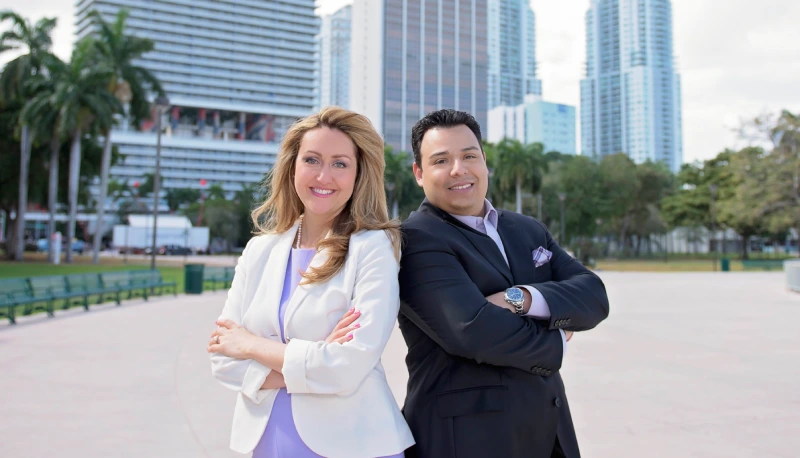
In short, even though Summary Administration may look like the “faster option,” Formal Administration is sometimes the safer and more practical way to properly settle an estate under Florida law. Contact our highly skilled probate attorneys, Natasha Chipiga and Fernando Orrego, co-founding partners of OC Estate and Elder Law, to find out which type of probate is right for your situation. Call us at (954) 251-0332 or email us at info@ocestatelawyers.com. Our attorneys speak English, Russian, and Spanish.
Юридический офис Наташа Чипига предлагает юридические услуги в области судебных процедурах наследования. Наташа Чипига, соучредитель и партнер юридической фирмы OC Estate and Elder Law, расположенной в Голливуде, штат Флорида, и представляет интересы клиентов по всей Флориде в вопросах наследственного права. Наташа может работать с русскоязычными людьми за границей, у которых в штате Флорида умерли члены семьи.
2. Is There a Time Limit for Starting a Probate in Florida?
No, there is generally no strict time limit for starting probate in Florida. In most cases, a probate case can be opened even many years after a person has died, as long as the estate assets still exist and have not been lost (through issues such as foreclosure, lapsed insurance policies, or frozen financial accounts).
BUT waiting to initiate the probate process can significantly increase the complexity of the process. Common issues arise when:
- Estate assets remain effectively “frozen” until probate is opened and completed, meaning real property cannot be sold, bank accounts cannot be accessed, and legal title to assets cannot be transferred or retitled.
- Over time, additional complications may develop, including unpaid property taxes, accruing expenses, and increased difficulty locating heirs, beneficiaries, or necessary witnesses.
- If any beneficiaries or heirs pass away before the estate is administered, their interests must be addressed through their own probate estates, adding probate upon probate, and additional layers of administration and complexity.
- Creditors may also continue to assert claims over time, and even if probate has not yet been opened, creditors may file claims or otherwise place the estate on notice through the probate process once it is initiated.
- Creditors may continue to assert claims over time, and even if probate has not yet been opened, they can file a caveat with the court, which does not open probate, but instead ensures the creditor is notified if probate proceedings are started. A caveat essentially serves as a formal request for notice that probate has been opened so the creditor can try to get paid.
Spanish speakers should contact Fernando Orrego at (954) 251-0332, a highly accomplished probate attorney serving the South Florida community including Miami, Hialeah, Doral, Little Havana, Dania Beach, Hollywood, Cooper City, Coral Springs, Davie, Parkland, Pembroke Pines, Tamarac, Miramar, Southwest Ranches, Weston, Fort Lauderdale, and many other cities in Florida.
Russian speakers should contact Natasha Chipiga at (954) 251-0332, based in Hollywood, Florida. Natasha is an American Attorney who focuses on helping Russian-speaking clients through the probate process in Miami, Sunny Isles Beach, Golden Beach, Hallandale Beach, Dania Beach, Parkland, Fort Lauderdale, and all other cities in Florida. Natasha is able to work with Russian-speaking individuals abroad who had family members pass away in Florida.
3. Do I Have to Appear in Person to Handle a Probate in Florida?
Probably not. Usually, you do not need to travel to Florida in person to handle probate. Almost everything in the Florida court system is handled electronically. Our probate lawyers, Natasha Chipiga and Fernando Orrego, can handle the entire process while you stay at home. You can sign most documents from the comfort of your own home while your probate attorney handles the court documents through electronic filing. Certain original documents, such as death certificates and Wills, must be physically mailed to the courthouse. Our probate attorneys take care of that as well.
The only circumstance in which in-person travel to Florida may be necessary is if there are physical assets – such as a home containing personal belongings, or a vehicle that needs to be personally collected, secured, or arranged for sale. The legal probate process itself can almost always be handled remotely from anywhere in the world through mail, email, phone, and online communication. And…contrary to what is often shown in old movies, there is no formal “reading of the Will” in Florida probate court.
Natasha Chipiga, of OC Estate and Elder Law, handles Florida probate administration, representing clients who live outside of Florida or outside of the United States but have a family member who passed away owning property in Florida, and need to start probate proceedings in Florida.
Юридический офис Наташа Чипига предлагает юридические услуги в области судебных процедурах наследования. Наташа Чипига, соучредитель и партнер юридической фирмы OC Estate and Elder Law, расположенной в Голливуде, штат Флорида, и представляет интересы клиентов по всей Флориде в вопросах наследственного права. Наташа может работать с русскоязычными людьми за границей, у которых в штате Флорида умерли члены семьи.
4. If I have a Will, does that Avoid Probate?
No. Having a Will does not avoid probate in Florida. So many clients call OC Estate and Elder Law asking for a Will, only to learn that in Florida, a Will does not allow their family to bypass the probate process upon their death.
A Will is simply a legal document that tells the probate court how you want your assets distributed and who you want to handle your estate (called the “Personal Representative” in Florida or “Executor” in other states). A Will does not transfer ownership of property on its own. Before any assets can be distributed, the Will must be submitted to the court and formally validated through the court-supervised probate process. The Judge reviews the Will to make sure that is it truly the final Will (that no other Wills are circulating with a later date), address any creditor claims or unpaid debts, and appoint a Personal Representative to handle and distribute the estate assets.
In practical terms, a Will acts like a set of instructions to the judge. The probate process is what gives those instructions legal effect and allows assets such as real estate, bank accounts, and other property to be legally transferred to the intended beneficiaries.
If the goal is to avoid probate, other estate planning tools are typically needed, such as a Revocable Trust a/k/a Living Trust, accounts with named beneficiaries (Payable on Death or Transfer on Death designations), or jointly owned property with rights of survivorship. Without those additional planning tools, probate is generally required even if a valid Will exists.
Contact our highly skilled probate and estate planning attorneys at (954) 251-0332 or at info@ocestatelawyers.com for a consultation on how proper estate planning can help your family avoid the costly (and unnecessary) probate process in Florida.
5. Can Anyone See Probate Records in Florida?
Yes. In Florida, probate court records are generally public records, which means anyone can view most documents that are filed in a probate case. Probate records can often be accessed online through the county clerk of court’s website, or by visiting the courthouse in person or requesting copies by mail. It is also important to note that probate is a public court process, which is one reason some people choose estate planning tools like a Revocable Trust. Alternately, Trust Administration is generally private and does not become part of the public court record.
While the probate file itself is public, certain sensitive information is protected. Personal details such as Social Security numbers, bank account numbers, and other confidential financial information are typically redacted (blacked out) to prevent identity theft. In some cases, certain documents, such as Death Certificates, may also be sealed or limited to protect privacy.