
In this month of America’s 250th birthday celebration, Florida lit a few sparklers of its own with a burst of exciting legal changes for our sunshine state residents. On July 1, 2026, Florida’s notoriously slow, paperwork-obsessed probate and trust laws got a massive tech-era upgrade. While our state lawmakers spent the spring squabbling about baby bills that don’t affect daily life, Governor Ron DeSantis quietly sat down on April 29, 2026, picked up a pen, and signed off on Chapter No. 2026-57. This was a mega modernization.
If you ever handled a loved one’s estate after they passed away, you know that Florida courts treated a $76,000 estate with the same agonizingly slow, formal bureaucracy as a $10 million mega-mansion. It was annoying. It was expensive. And it did not make sense. But things are changing. Here is a detailed breakdown of the revised Florida probate and trust laws, created to save your family from a prolonged paperwork nightmare.
1. Summary Administration Just Got a Heavyweight Promotion
The crown jewel of this new legislation is that the Summary Administration threshold has officially doubled. In the old days (meaning, literally weeks ago), if someone passed away with assets valued at more than $75,000, you were automatically forced into “Formal Administration” (a/k/a Probate Administration). Formal Administration is the most common type of probate. The court appoints a personal representative to settle the estate and distribute assets to beneficiaries. Most cases take 9–12 months, though more complex estates may take longer, especially when filing the decedent’s taxes or if there is a home to be sold.
- Historic Translation: Months of waiting, mandatory publication in newspapers nobody reads except for creditors (whom we are trying to avoid), and keeping up with your deceased loved one’s bills before actually inheriting any of their assets.
- Now? The limit jumped from $75,000 to $150,000. (Keep in mind that homestead property is exempt from this calculation, therefore a person can have a primary residence plus an additional $150,000 in a bank account to qualify for “Summary Administration.”
By doubling this threshold, the legislature has allowed a far greater number of middle-class estates to utilize the streamlined Summary Administration track. This simplified process bypasses full court supervision, does not require a Personal Representative getting appointed by a court, thus resulting in a substantially faster and more cost-effective distribution of assets to beneficiaries. So, if the person passed away with assets under $150,000, you file the Petition for Summary Administration, the judge signs the Order, and you distribute the assets. Boom. Done.
2. Increased Small Estate Thresholds
If a person does without having a Last Will and Testament (“Will”), it is called dying “intestate.” Previously, if a family had to deal with an intestate estate that consisted only of certain personal property (like a used car, some furniture, or a modest checking account), you could only skip formal court probate if the value was under $10,000.
- Now? The new law bumps that threshold up to $20,000.
- Example: If your eccentric uncle passed away without a Will and left nothing but a $15,000 truck and a collection of vintage records, you can now transfer that property without opening a massive, expensive court case that would eat up half the truck’s value.
3. Uncle Sam’s Refund Check Is Easier to Cash
A common scenario: your spouse passes away, and a few months later, a surprise income tax refund check from the IRS arrives in the mail. Good news, right? Except the check is made out to the deceased person.
- Historic Translation: If that refund check was over $2,500, a surviving spouse or child could not just deposit it or cash it. They had to open a probate administration with the Court just to get permission to touch the money. Yes, opening a probate administration to collect a modest tax refund is exactly as silly as it sounds.
- Now? The new law doubles that limit to $5,000. If the refund check is under $5,000, the surviving family can claim it without having to hire a lawyer or initiate any formal court process.
4. Financial Institution Threshold Increase
We see this all the time: someone passes away, and the family discovers a random, forgotten savings account holding a whopping $1,200.
- Historic Translation: Under the old rules, banks could make you jump through legal hoops to access anything over $1,000.
- Now? The new threshold for a financial institution affidavit has been bumped to $2,000.
Is it life-changing? No. But it prevents banks from requiring costly legal procedures to access small accounts that may be worth less than the expense of obtaining them.
5. Safe Deposit Boxes: The Bank Runaround Ends Now
Have you ever tried to get a bank to open a deceased person’s safe deposit box? It is a special circle of bureaucratic hell.
- Historic Translation: Even if you walked into the bank holding official Letters of Administration from a Florida judge and the keys or code to the safe room, bank managers would sweat, stall, and tell you they needed to “send it to legal” for a three-week review.
- Now? The new law draws a hard line in the sand: if a Personal Representative presents court-issued Letters of Administration, the bank must grant access. Period. You can pay any outstanding lease fees, grab the documents or jewelry inside, and close the box without the corporate runaround.
6. Personal Representatives Have Stronger Authority (The “Give It Back” Clause)
If you are named the Personal Representative (called Executor in other states) of an estate, your job is to gather the assets. But what happens when Cousin Eddy is sitting in the deceased’s house, refusing to turn over the keys? Or what if a bank or other financial institution redirects you through a million different departments and phone numbers, while refusing to recognize your authority as a legally appointed personal representative of the estate?
- Historic Translation: Previously, Personal Representatives had the authority to ask nicely, but dragging someone to court to enforce that authority was a muddy legal gray area when it came to who paid the legal bills.
- Now? The new law changes the game, giving personal representatives stronger authority to recover estate assets by allowing them to sue uncooperative parties, and may require the uncooperative party to pay court costs and attorney’s fees.
7. Shoutout to Palm Beach County (Cheap Homestead Petitions)
A bit of localized good news for our friends that passed away in Palm Beach County. The court system there now officially allows a standalone Petition to Determine Homestead Status.
- Historic Translation: If a resident of Palm Beach County died and their only asset was their primary residence, the family can file a standalone petition with the court to inherit that residence. This avoids having to open a Summary Administration or Full Probate Administration with the court, which means significantly cheaper filing fees, much less in attorney fees, and much less wait time to receive title to the property.
8. Fast-Track Trust Closures (Effective April 29, 2026)
This one actually went into effect the moment the Governor signed it back in April, This law creates a streamlined process for closing certain irrevocable, non-adversarial trusts. If beneficiaries receive notice and no one objects within the required timeframe, the trustee can settle the trust without going to court. If everyone agrees, the trust closes out smoothly. Imagine that!
The Takeaway
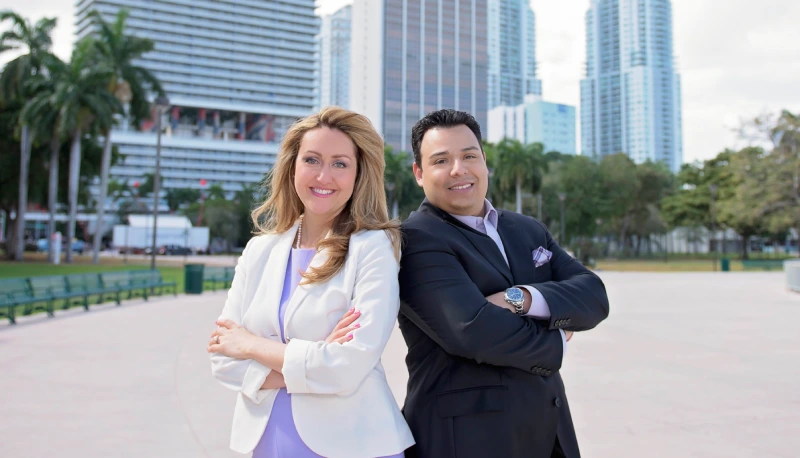
After the loss of a loved one, simply getting through the day is a challenge. Then probate arrives with its stack of paperwork, legal jargon, and costly attorney fees. Probate is an uphill legal struggle, but our highly skilled South Florida estate attorneys, Natasha Chipiga and Fernando Orrego, have been helping families handle inheritance matters for over a decade.
Florida’s probate system has historically felt like a system designed in 1895. By increasing the summary administration threshold, modernizing outdated financial limits, and strengthening the authority of personal representatives, these new updates are a massive win for everyday families who just want to wrap up their loved ones’ affairs without getting drained by court costs and bogged down by delays.
Now that you understand the updates to probate, you may be wondering if there is a way for your family to avoid probate all together? The good news is that YES, there are several ways to avoid ending up in a Florida probate court. This is best accomplished through proper estate planning, often involving the use of a Revocable Trust. Our knowledgeable probate attorneys and trust lawyers, Natasha Chipiga and Fernando Orrego, speak English, Spanish, and Russian. Contact OC Estate and Elder Law at (954) 251-0332 or info@ocestatelawyers.com to get started. Our law firm conducts consultations over the phone or Zoom.
Frequently Asked Questions
1. What is Ancillary Probate in Florida and When Does a Person Need It?
Ancillary probate is a special type of probate case in Florida that is required when someone passes away in another state (and that state is listed as their primary residence on their Death Certificate) but owns property located in Florida. Even if a probate case is already open in the person’s home state (for example, New York or another state), that court does not have the legal authority to transfer or retitle real estate located in Florida. Because each state controls property within its own borders, a separate Florida court case must be opened to handle the Florida assets. This is called Ancillary Probate.
Think of it as a “second, limited probate case” in Florida. The Florida court will typically require court orders from the main probate case in the decedent’s home state, and then issue similar orders under Florida law, which will allow the transfer or distribution of the Florida property to the rightful heirs or beneficiaries.
You may need Ancillary Probate if the deceased person:
- Lived outside of Florida, and owned real estate in Florida.
- If the deceased person owned titled personal property registered in Florida (such as a car, boat, or airplane)
- Held bank accounts located in Florida (less common)
At OC Estate and Elder Law, we regularly handle ancillary probate cases for out-of-state families who need help transferring Florida property without having to travel here or navigate the Florida court system on their own. We manage the court filings, coordinate with the probate court in the person’s home state, and help ensure the property transfer is completed correctly and efficiently.
If you are not sure whether your loved one’s estate requires ancillary probate in Florida, call OC Estate and Elder Law at (954) 251-0332 to speak with a Florida probate attorney. Our attorneys, Natasha Chipiga and Fernando Orrego, speak English, Russian, and Spanish.
Юридический офис Наташа Чипига предлагает юридические услуги в области судебных процедурах наследования. Наташа Чипига, соучредитель и партнер юридической фирмы OC Estate and Elder Law, расположенной в Голливуде, штат Флорида, и представляет интересы клиентов по всей Флориде в вопросах наследственного права. Наташа может работать с русскоязычными людьми за границей, у которых в штате Флорида умерли члены семьи.
2. Do You Have to Pay Court Fees for Probate in Florida?
Yes. In Florida, you must pay court filing fees to open a probate case. These fees are required by the county clerk of court and are separate from attorney’s fees. The clerk uses these fees to open the case, maintain the official court file, and process all probate documents. In most Florida counties, the basic probate filing fee is typically around $400, but the exact amount can vary depending on the county and the type or size of the estate. Larger or more complex estates may have additional filing-related costs as well.
It is important to understand that these court fees do not go to your attorney – they are paid directly to the clerk of court. Our experienced Florida probate attorneys, Natasha Chipiga and Fernando Orrego, can give you a clear estimate of all expected court costs based on the specific facts of your case.
3. How Does Probate Work in Florida?
Probate Administration in Florida is a court-supervised process used to legally distribute a person’s estate after they pass away. Think of it as a step-by-step process that the family starts by hiring a probate attorney that is licensed in the state where the decedent lived upon their death. For example, if someone was a legal resident in Miami, a licensed Florida attorney must open a probate case in Miami-Dade County. A judge then supervises everything to make sure the estate is handled correctly from start to finish.
Our highly skilled probate attorneys, fluent in both Russian and Spanish, Natasha Chipiga and Fernando Orrego, are part of OC Estate and Elder Law, a trusted South Florida law firm with over 10 years of experience. Our firm focuses on handling estates through Probate Administration, Summary Administration, and Trust Administration all across Florida.
Once an attorney is hired, the process then begins when a petition is filed with the court to open the estate. The judge will appoint a Personal Representative to manage the estate. This person is responsible for carrying out the court’s instructions and managing the assets in the estate. If the person died with a Will, the Personal Representative is listed in the Will. If they died without a Will, the family may choose who they wish to serve as Personal Representative. The court then does their due diligence to ensure this person is qualified to serve as Personal Representative. Under Fla. Stat. § 733.303, 733.304, and 733.504, a Personal Representative must be:
- At least 18 years old, and
- Mentally and physically capable of performing the duties required to administer an estate
- Cannot be a convicted felon
- Otherwise deemed unsuitable due to misconduct or conflict of interest
- Must Meet Florida residency or relationship requirements:
- A Florida resident, OR
- If a non-resident, they must be closely related to the decedent, such as a:
- Spouse
- Parent
- Sibling
- Child
- Or another close family member permitted by statute
- Note that an out-of-state resident who is not related in one of these ways is typically not
Next, the Personal Representative locates, gathers, and adds up all of the deceased person’s assets, such as real estate, bank accounts, vehicles, and personal property. A formal notice is published in a local county newspaper to notify any creditors, giving them an opportunity to make claims against the estate. The Personal Representative then pays (or negotiates down) valid debts, expenses, and any required taxes. Once all debts are resolved, the remaining assets are distributed to the beneficiaries or heirs according to the Will or if the decedent had no Will, assets pass according to Florida intestacy laws (to the closest living family members). Finally, the Personal Representative files the necessary paperwork to close the estate, and the court formally ends the case.
Throughout the entire process, our highly skilled probate lawyers, Natasha Chipiga and Fernando Orrego, will be by your side, providing legal counsel, handling paperwork, communicating with the court and interested parties, and ensuring that your loved one’s estate is administered efficiently in accordance with Florida probate laws. Our goal at OC Estate and Elder Law is to make the Florida probate administration process as smooth and stress-free for you as possible.
OC Estate and Elder Law focuses on handling estates all across Florida, including Miami, Sunny Isles Beach, Golden Beach, Hallandale Beach, Dania Beach, Hollywood, Cooper City, Coral Springs, Davie, Parkland, Pembroke Pines, Tamarac, Weston, Fort Lauderdale, and all other cities in Florida.
4. In Florida, What is Undue Influence, and how can a Lawyer Prove it?
In Florida, undue influence occurs when someone improperly pressures or manipulates a vulnerable person into changing their Will or Trust, beneficiary designations on their bank accounts or life insurance policy, or the title to their home in a way they would not have made on their own. It is more than giving advice, it involves taking advantage of someone who is sick, elderly, isolated, or dependent. Under Florida law, undue influence is recognized in Florida Statutes § 732.5165, which provides that a will or part of a will is invalid if it was procured by fraud, duress, mistake, or undue influence.
Because undue influence often happens behind closed doors, it can be difficult to prove directly. In Florida probate cases, attorneys typically rely on circumstantial evidence and legal “red flags” to build the case. A probate lawyer may help by:
- Identifying suspicious changes to a Will or estate plan, especially if they occurred shortly before death
- Reviewing whether the person was isolated from family or dependent on a caregiver or third party
- Gathering medical records, witness testimony, and communications that show confusion, fear, or vulnerability
- Interviewing doctors, friends, neighbors, and caregivers to determine whether the person was acting independently or suffering from a medical condition, such as Alzheimer or Dementia, that may have influenced their decision making
- Presenting evidence in court to show that the will was the result of improper pressure and should be set aside
Proving undue influence is often a challenging legal battle because it typically involves private, behind-the-scenes interactions that require strong evidence to prove. These cases often fall under the practice area of probate litigation. As a result, these cases are time-consuming and costly, and many attorneys are cautious about taking them on unless there is clear supporting evidence. Family members are also often hesitant to pursue these claims without a reasonable guarantee that undue influence can be proven. If undue influence is proven, the court can ultimately invalidate the “unfair” Will or certain provisions in that Will, allowing a prior valid Will, or Florida intestacy law, to determine how the estate is distributed.
5. Can a Lawyer Access a Deceased Person’s Bank Accounts?
Yes. In Florida, a probate lawyer can help you legally access, manage, and distribute a deceased person’s bank accounts, which are typically “frozen” by the bank as soon as they learn of the account holder’s death. The accounts remain “frozen” until the probate court appoints someone with legal authority.
Our highly experienced probate attorneys, Natasha Chipiga and Fernando Orrego, can help guide you through the process of obtaining court-issued authority, usually in the form of Letters of Administration (or Letters Testamentary if there is a Will). This document serves as official proof that you are the Personal Representative and have the legal right to act on behalf of the estate…and see how much is in the bank account!
Once appointed, the lawyer can help you formally notify the bank, request account information, and transfer funds into an estate bank account. From there, the money is used to pay valid estate expenses such as funeral bills or other final bills, taxes, and any creditor claims that arise. After those obligations are satisfied, the remaining funds are distributed to the rightful beneficiaries as listed in the Will or according to Florida law. Without this court-appointed authority, banks will generally not provide any account information, allow access to or release funds from an individual’s account, even to close family members.
Contact OC Estate and Elder Law at (954) 251-0332 or email us at info@ocestatelawyers.com for a consultation with our experienced Russian speaking probate attorney , Natasha Chipiga, or our experienced Spanish speaking probate attorney, Fernando Orrego.
6. Who is Responsible for Paying the Attorney's Fees in a Florida Probate?
In most Florida probate cases, attorney’s fees can be paid from the estate assets, not from the personal funds of the family members or beneficiaries. Most probate clients usually pay a small retainer fee upfront to cover court filing costs, and then the bulk of the attorney’s fees can be paid later on, once the estate can access the decedent’s assets such as bank accounts, or proceeds from the sale of real estate.
Florida probate attorney’s fees are generally governed by statute and must be “reasonable.” Florida Statute § 733.6171 provides guidelines for reasonable attorney compensation in probate cases. Regardless, the costs of a probate case vary immensely. Summary Administrations are generally less expensive and shorter in duration. The cost of a full probate administration depends on several important factors such as:
- Overall value of the estate (adding up the total value of all the decedent’s assets)
- Types of assets involved in the probate proceeding (real estate, bank accounts, life insurance policies, brokerage accounts, businesses, and tangible assets). Remember that not ALL assets need to pass through the probate process in order to be distributed.
- Number of beneficiaries entitled to the inheritance (every beneficiary needs to be provided with a copy of every legal document during the process and sign off on these documents)
- The existence of a Will, lack of a Will, or resolving the matter of a lost Will
- Debts of the deceased individual that turn into creditor claims must be settled or negotiated, and;
- Most importantly, the family dynamics during the process (does everyone get along and can the beneficiaries make decisions together or does the attorney need to negotiate with each family member separately).
Note that both types of probates have standard costs and fees such as personal representative fees, attorneys’ fees, accounting fees, court fees and filing costs, appraisal costs, and mailing expenses.